Use Cases
How AI Supports Real Business Decisions
AI Readiness
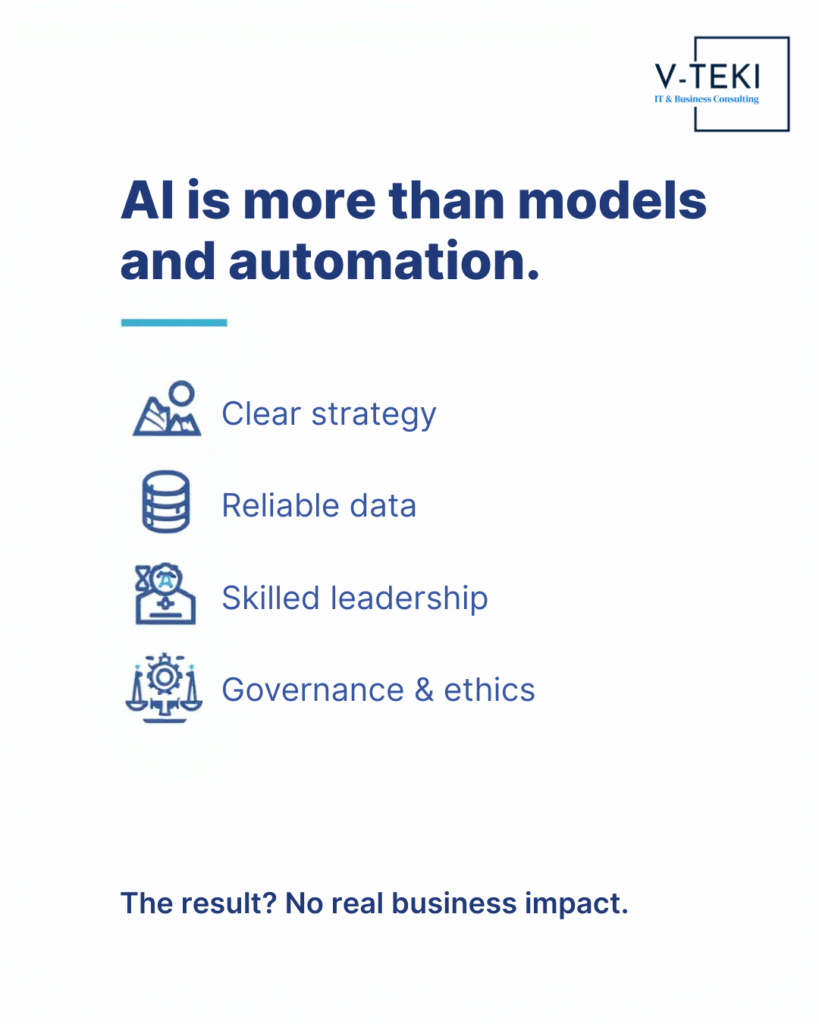
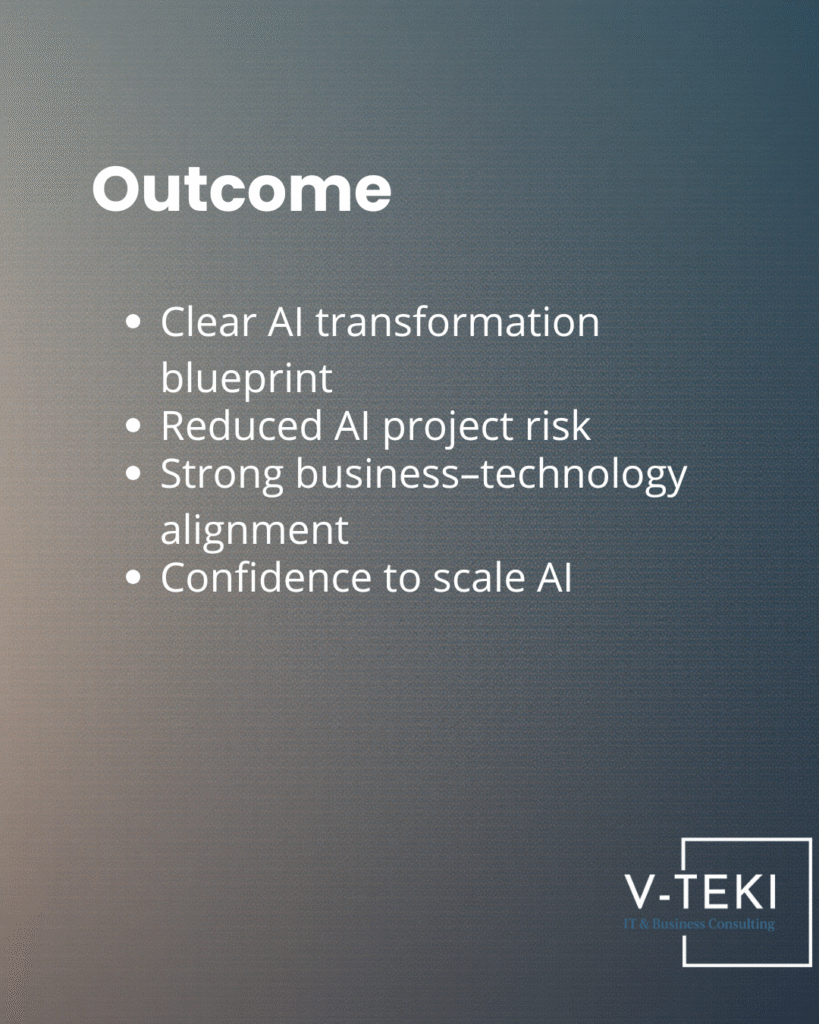
- Most AI initiatives fail not because the technology is inadequate, but because organizations are not structurally and strategically ready to adopt it.
- We frequently see AI initiatives launched without a clear strategy, reliable data foundations, leadership alignment, or governance frameworks. This often leads to stalled pilots, low adoption, and limited measurable business impact.
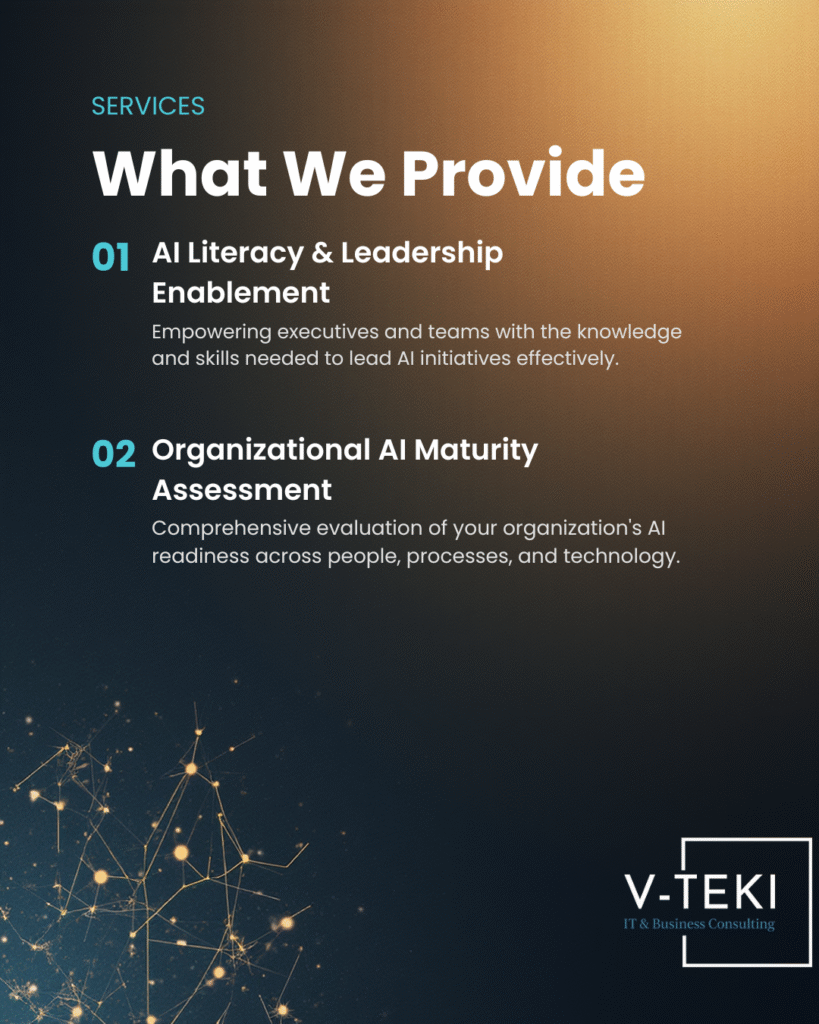
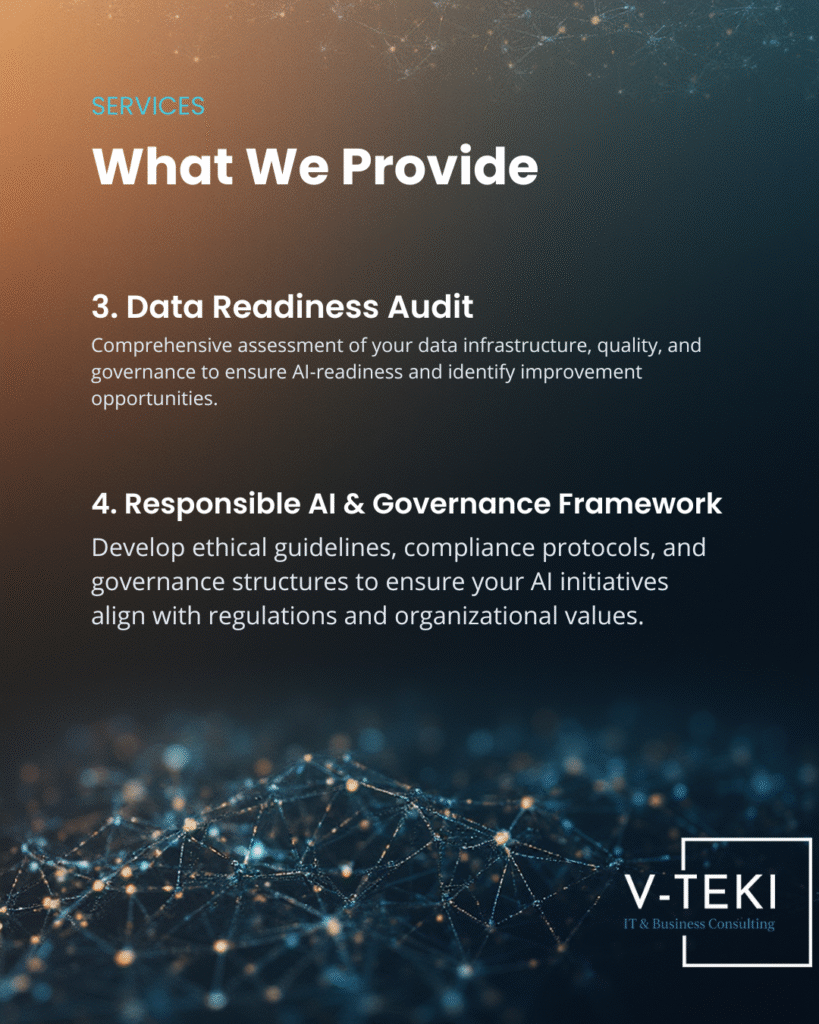
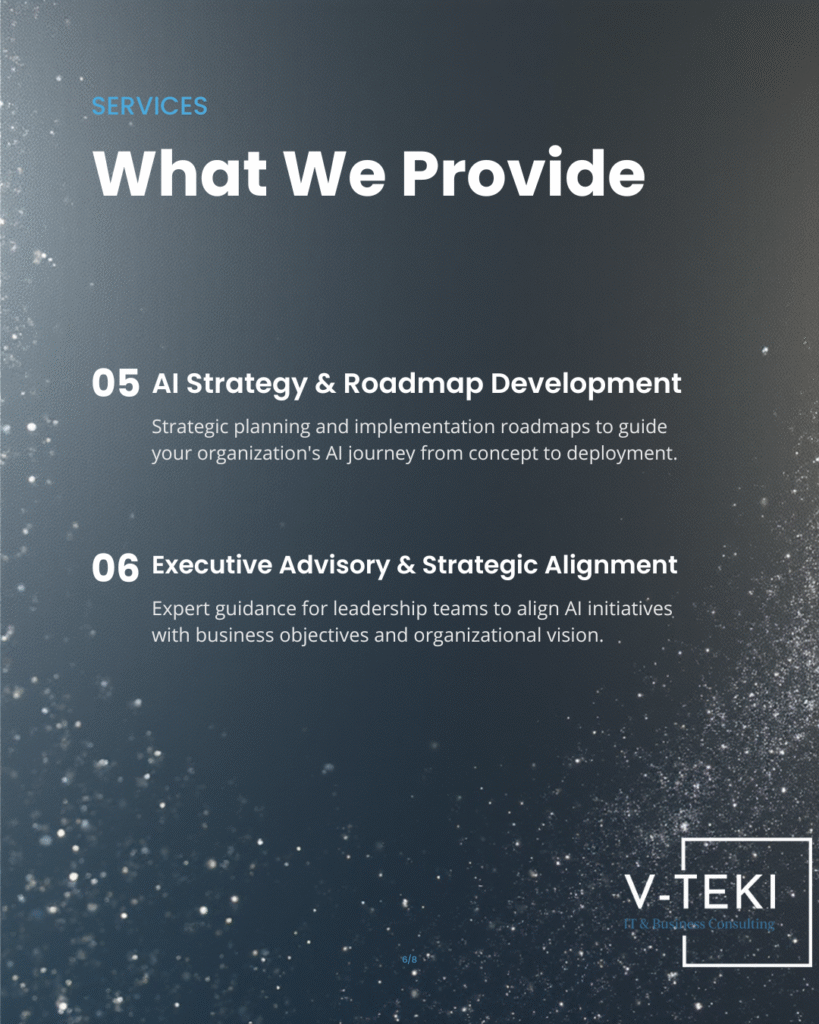
- At V-TEKI, we support enterprises through AI Consulting & Readiness Assessment, helping organizations build the essential foundations required for safe, effective, and sustainable AI adoption. Our work spans leadership enablement, AI maturity and data readiness assessments, responsible AI governance, and the development of actionable AI roadmaps aligned with business objectives.
- AI success does not begin with models or tools.
- It begins with organizational readiness.
- If your organization is planning or scaling AI initiatives, we’d be happy to connect.
Document Intelligence
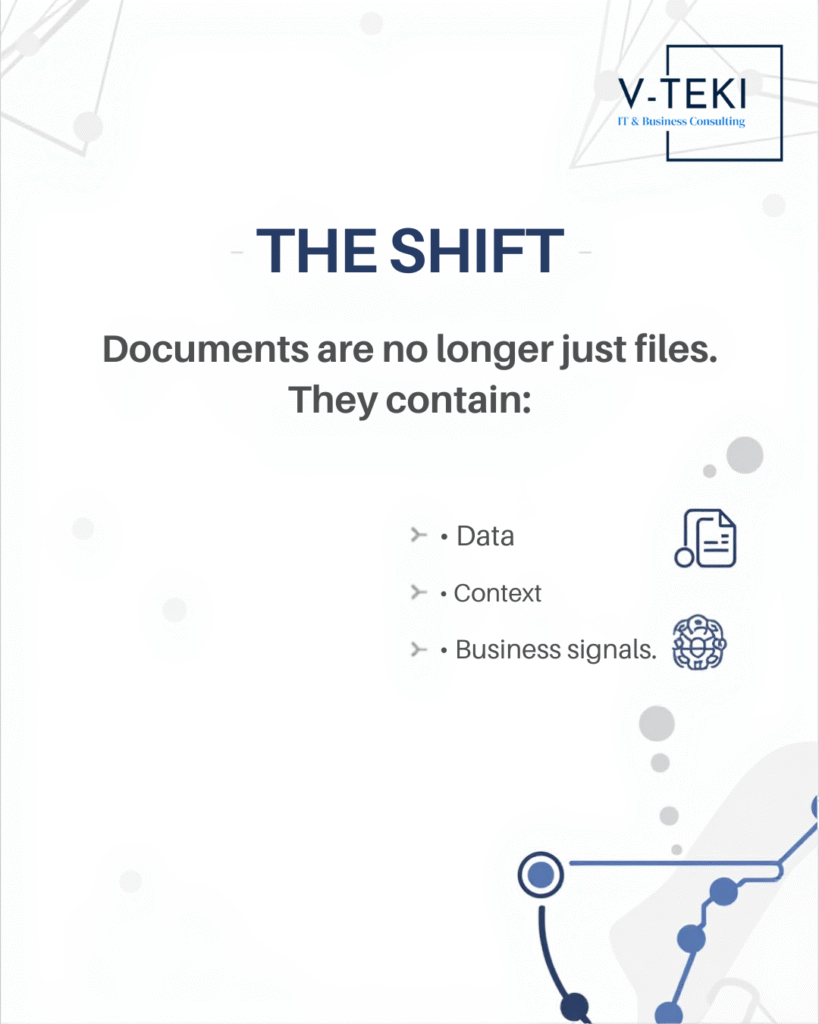
Documents are no longer just files to store.
They are one of the richest sources of business data.
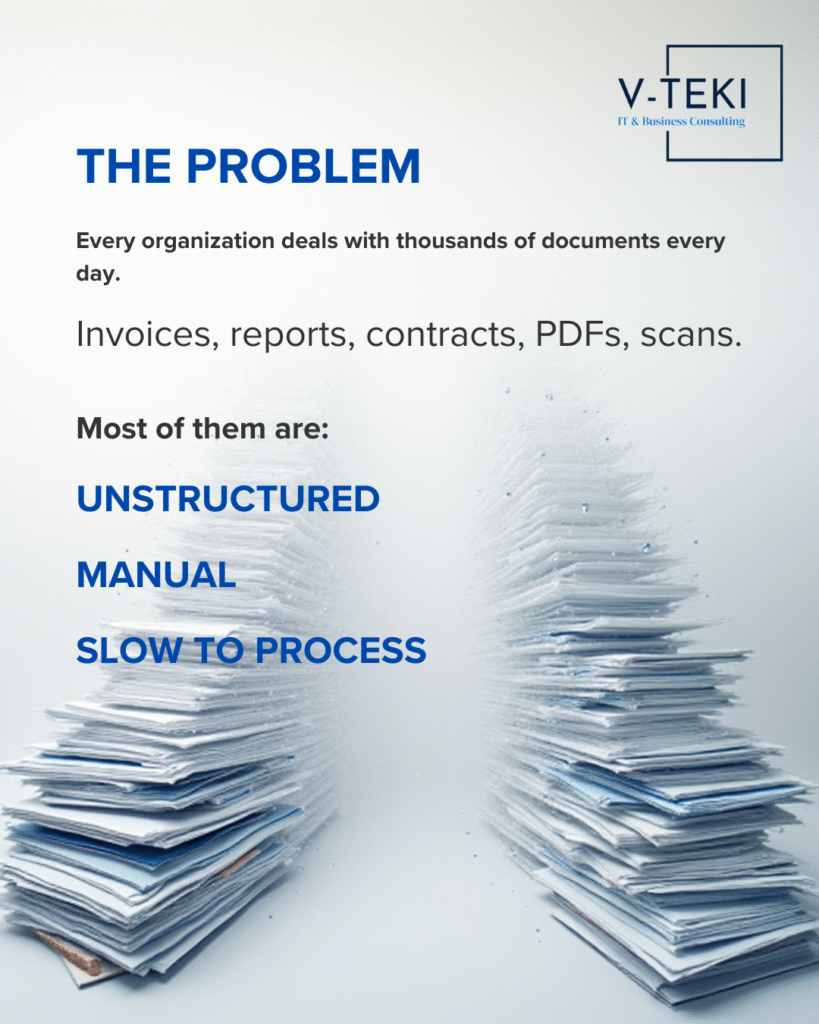
Yet many organizations still rely on manual, fragmented processes to handle documents, PDFs, scans, contracts, invoices, and reports, making it difficult to extract value, ensure accuracy, and scale operations.
Document Intelligence changes this approach.
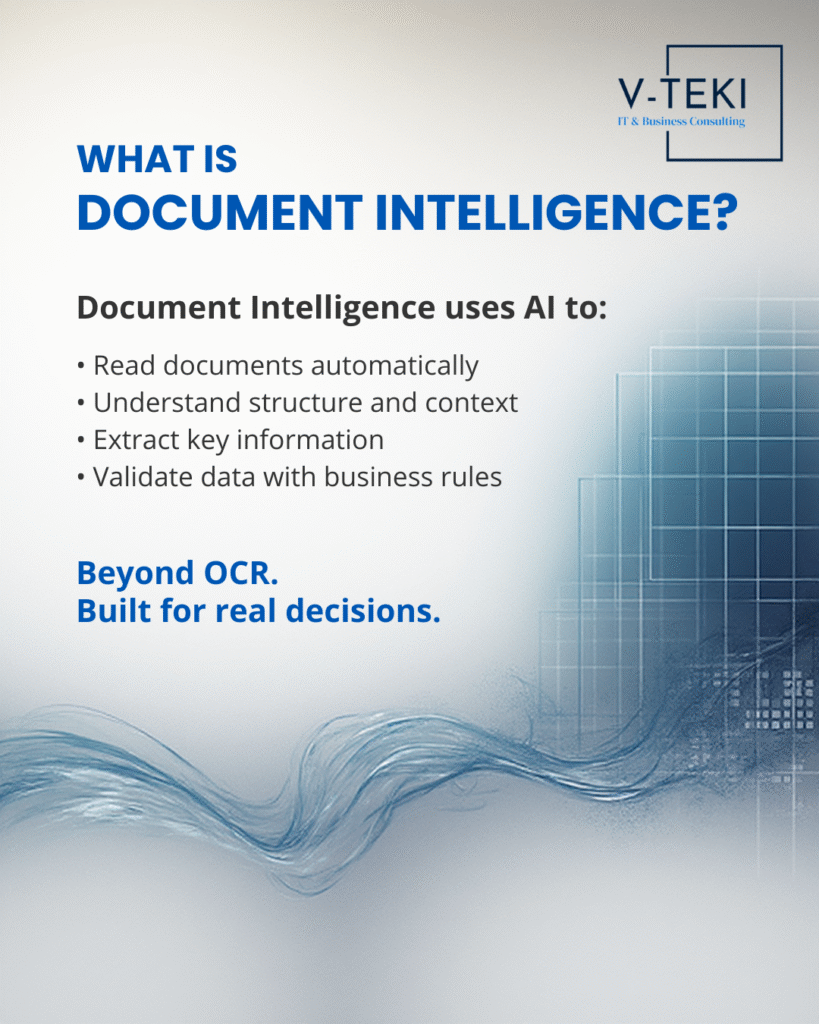
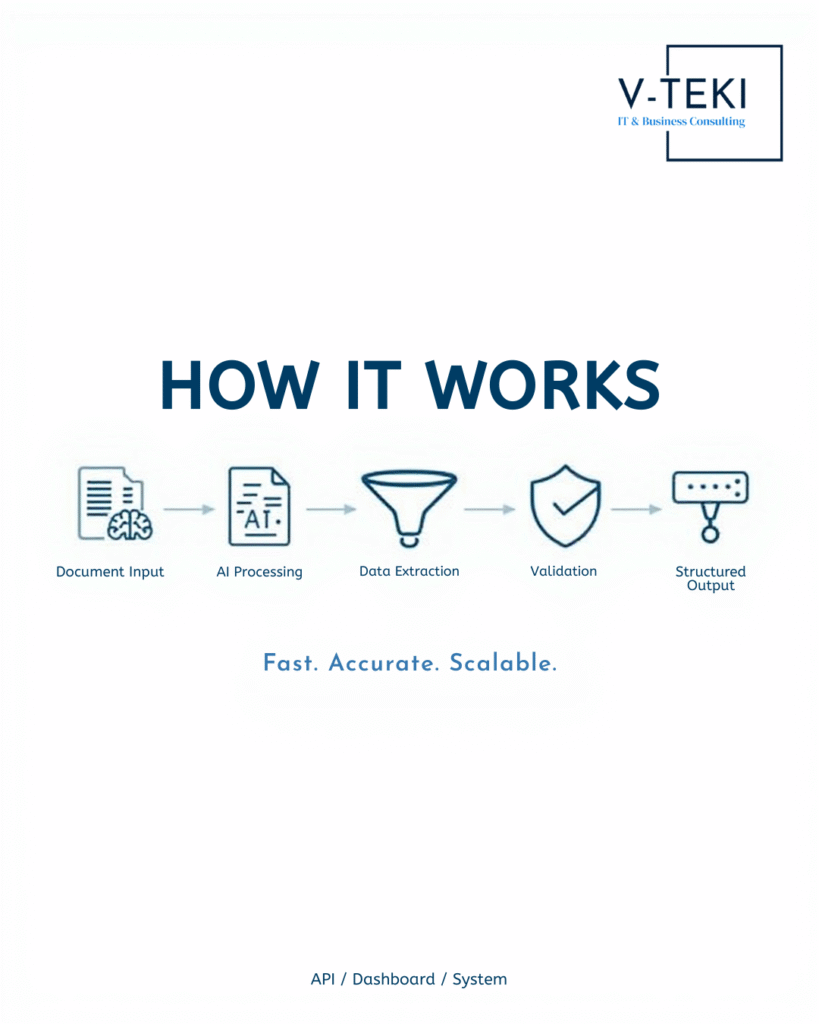
By combining AI, data extraction, and validation logic, organizations can transform unstructured documents into structured, decision-ready information that supports analytics, automation, and compliance.
The result is not just faster processing, but better visibility, stronger control, and more confident decision-making, across industries such as finance, operations, HR, legal, and compliance.
We help organizations move beyond basic document automation toward true document intelligence, designed for real business impact.
AI for Onboarding
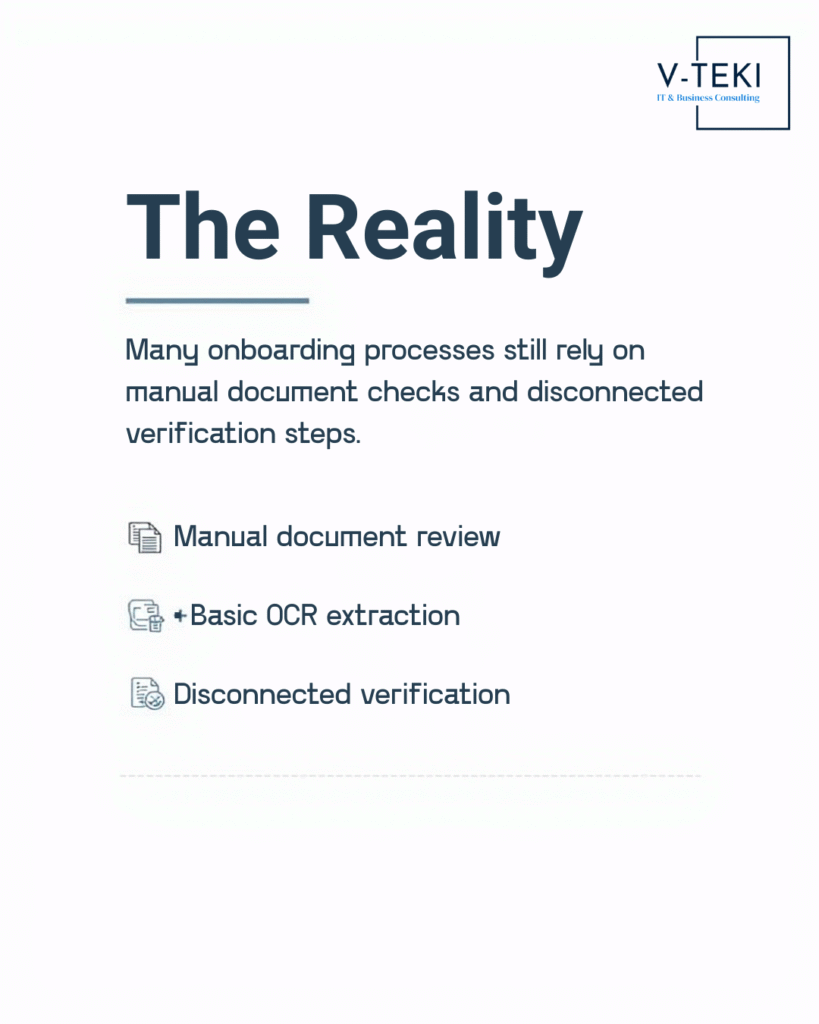
Many onboarding processes still depend on manual document review, basic OCR extraction, and fragmented verification workflows.
While these methods may work at small scale, they quickly break down as volume grows, introducing delays, inconsistent compliance checks, and higher operational risk.
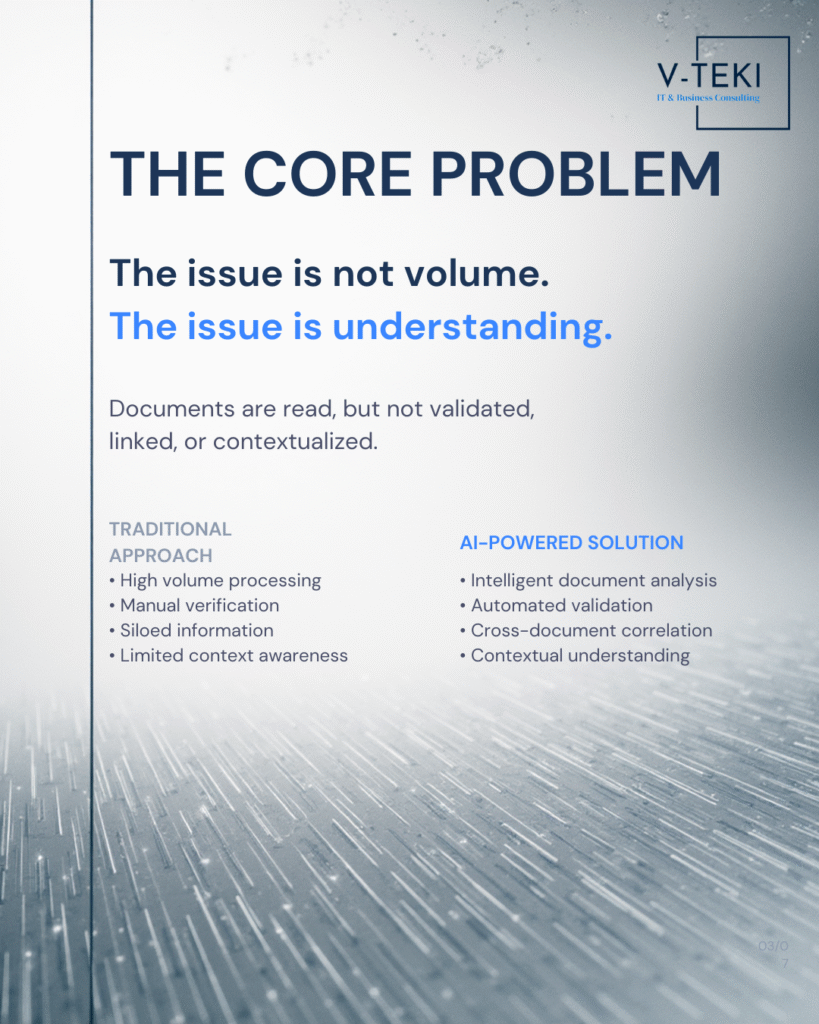
The challenge is not the number of documents.
The challenge is the lack of contextual understanding, validation, and traceability.
Document intelligence enables organizations to transform onboarding into a structured, auditable, and compliance-ready process, without relying on manual judgment at every step.
In today’s environment, effective onboarding is defined not only by speed, but by accuracy, trust, and regulatory confidence.
Conversational AI
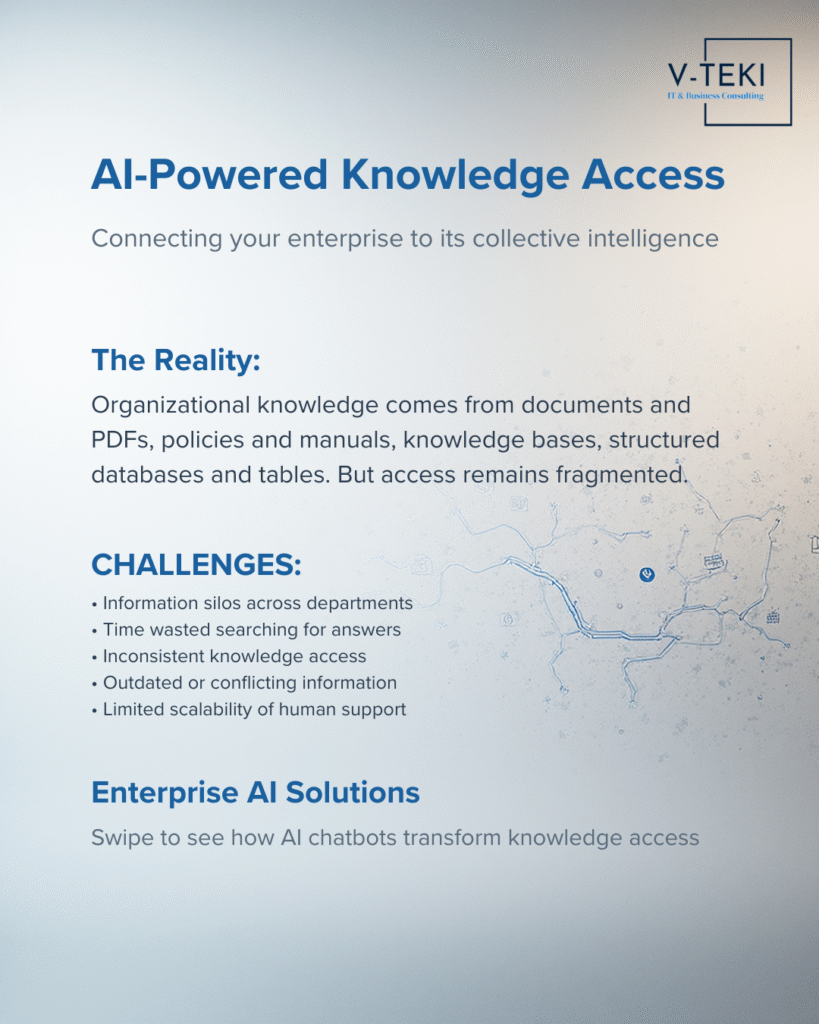
Organizational knowledge is distributed across documents, knowledge repositories, and structured databases.
Accessing this information often requires switching tools, searching files, or running queries, which slows teams down and introduces inconsistency.
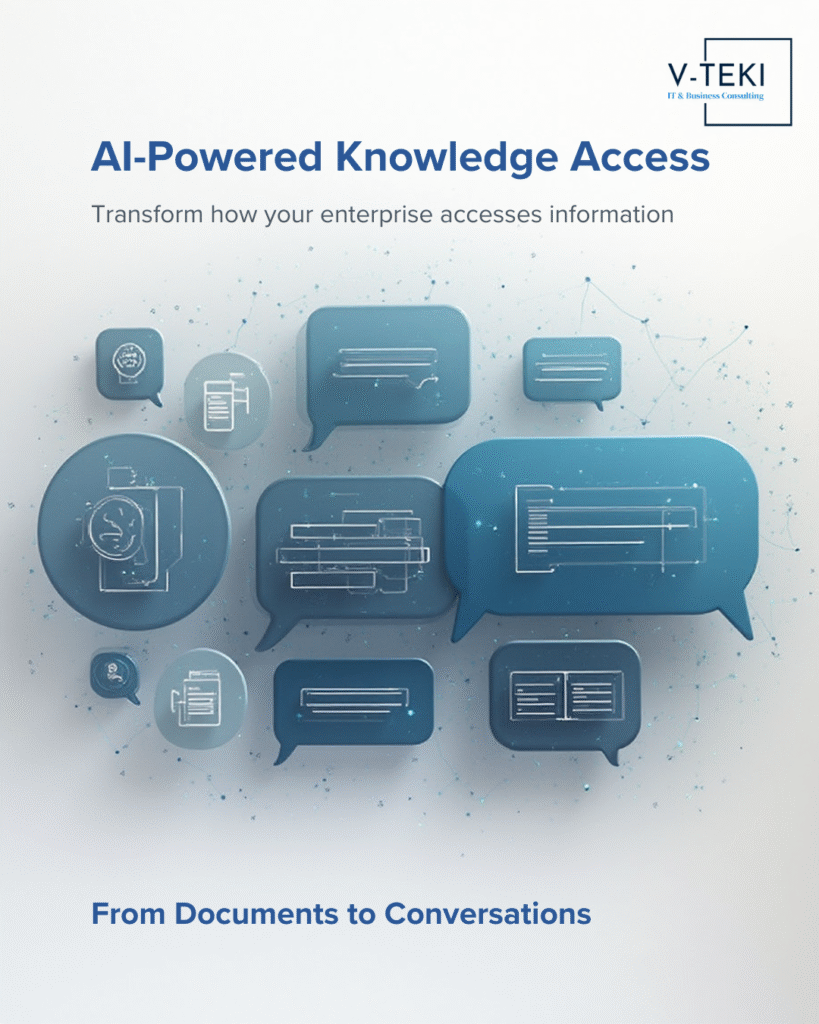
AI-powered chatbots provide a new interface for knowledge access.
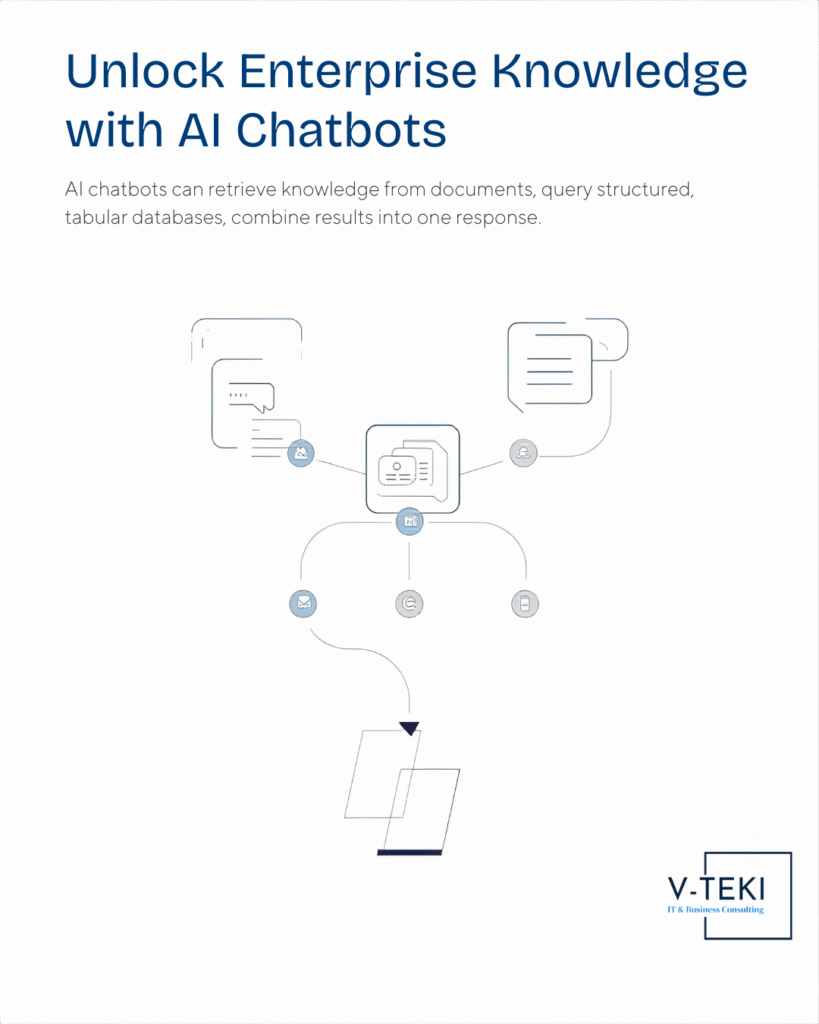
By combining document intelligence, database querying, and retrieval-augmented generation (RAG), chatbots can retrieve information from both unstructured documents and tabular data, then deliver clear and contextual answers through natural language.
This approach simplifies knowledge access, improves consistency, and supports faster, more confident decision-making across the organization.
AI in Recruitment
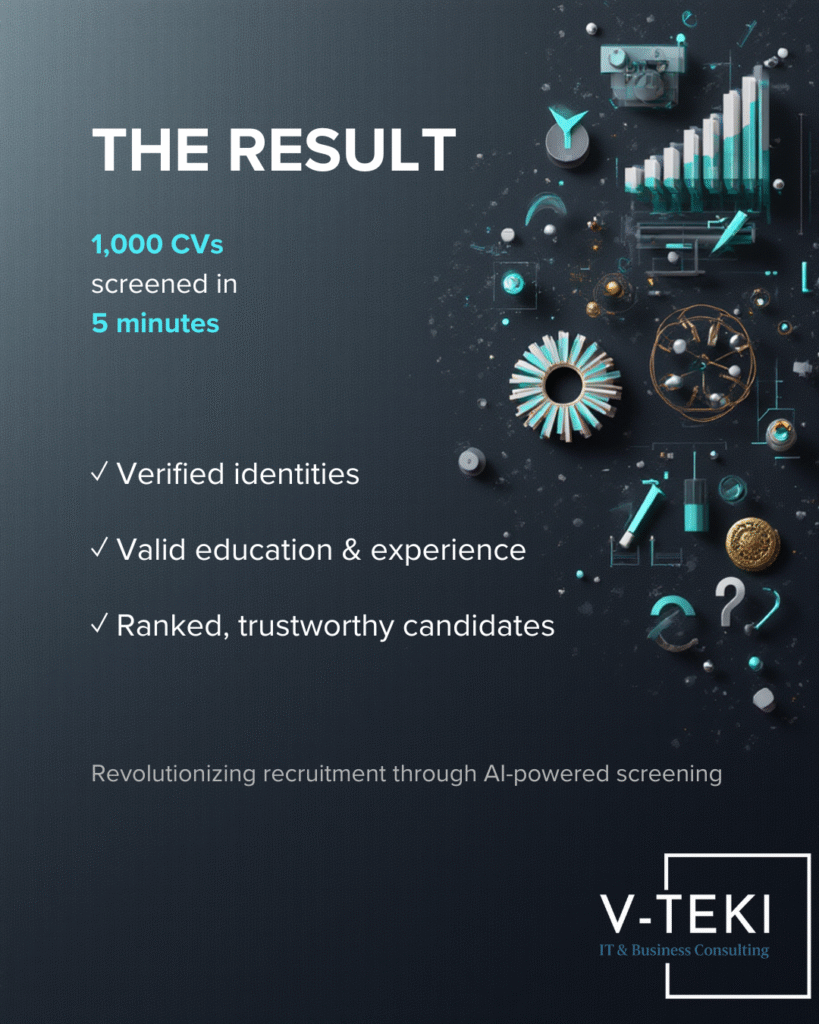
AI can screen 1,000 CVs in minutes, but speed alone is not transformation.
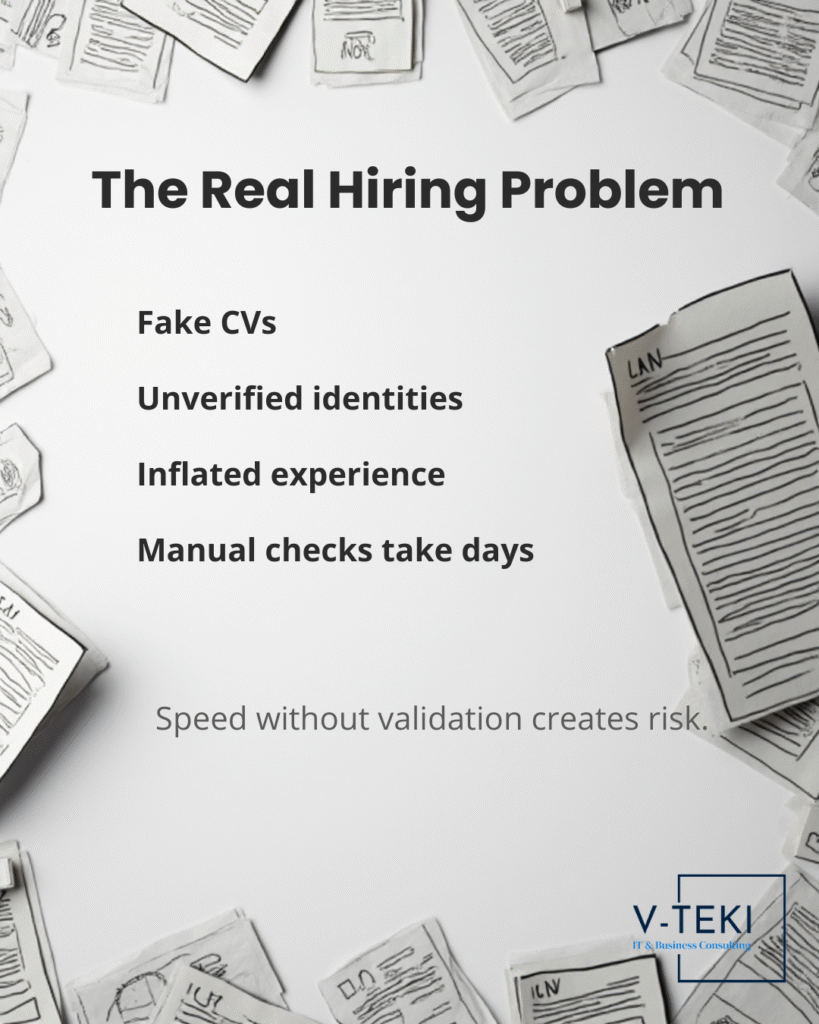
In recruitment, the real risk is not volume.
It is decision-making based on unverified data.
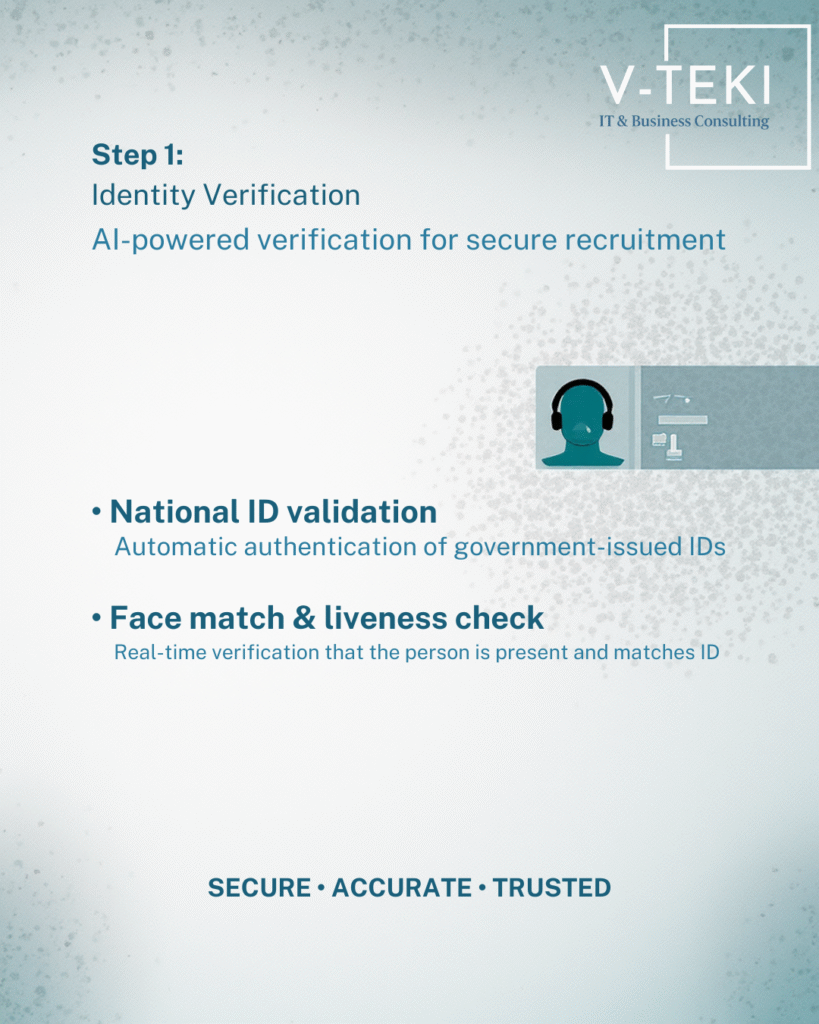
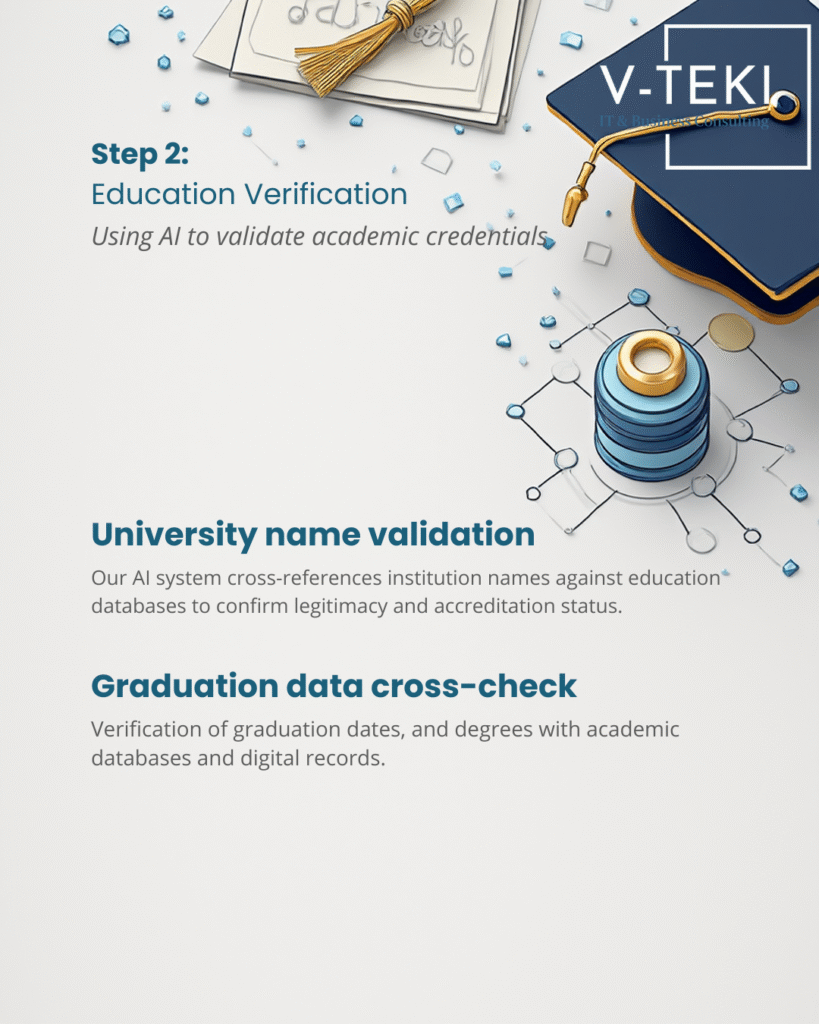
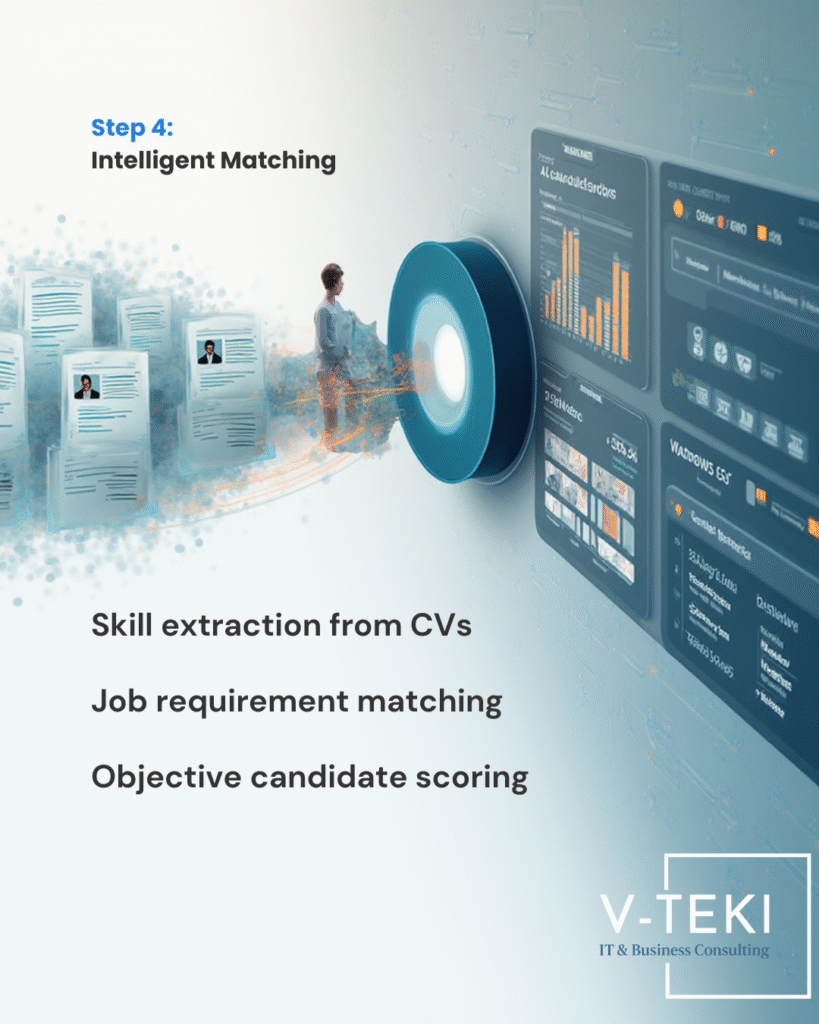
Modern AI-driven hiring systems begin with trust:
Identity verification
Education validation
Employment history checks
Objective, evidence-based matching
When these foundations are in place, AI becomes a decision-support system, not just an automation tool.
The result?
Recruiters spend less time verifying data and more time evaluating people.
AI doesn’t replace HR professionals.
It strengthens their judgment.

Let’s Build the Future of AI Together
Whether you’re starting your AI journey or scaling existing capabilities, we’re here to guide you.